
I Don't Want to Survive. I Want to Live.
As we arrive at the 250th anniversary of America, it feels as if we are, as a country, at something of a cultural crossroads. I realize I usually keep these essays to things specifically about Taylors. But here, as we approach the Fourth of July, I want to think with you all for a minute about the current state of our country.
Something feels heavy right now. It isn't even one particular political party. On both the left and the right, it genuinely seems that people broadly feel something is broken. In an April 2026 Pew study, 77% of Americans said our political system needs major change or complete reform, the highest of about 25 wealthy nations surveyed. Of those, nearly half, 49%, think it is broken beyond repair.
I want to set that next to another fact. We are the richest people, generally speaking, who have ever lived on the face of the planet. I have more access to information and resources than almost anyone in history, including most royalty who ever lived. And yet we all feel that something is broken.
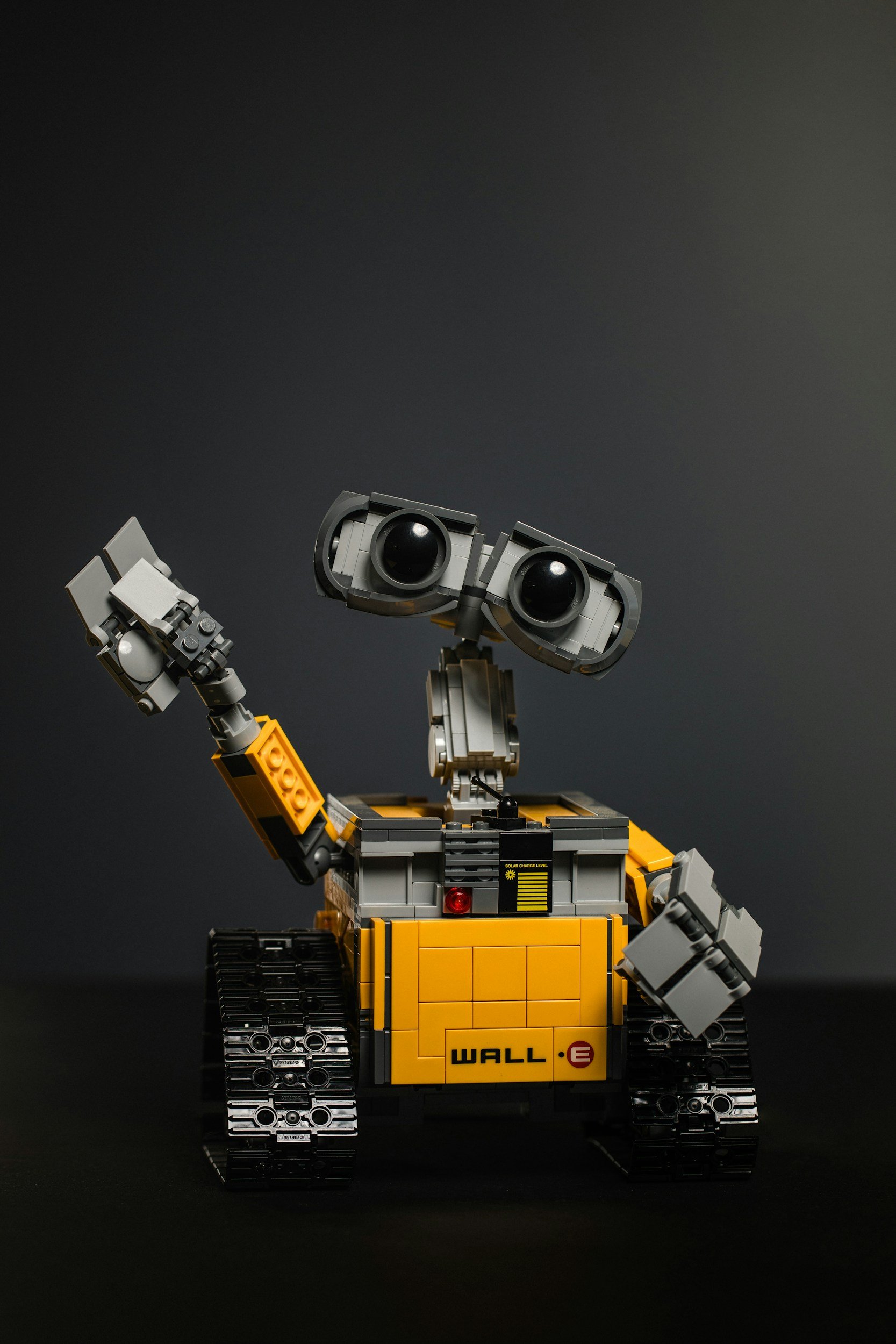
One of my favorite movies is WALL-E, the Pixar film about a little trash-collecting robot left behind on Earth to clean up the mess after humanity has gone. The humans now live out on a spaceship run entirely by what looks like an artificial intelligence, in a life of complete luxury. Every year they send a robot back to Earth to check on things. In this story, the robot, EVE, finds a plant that WALL-E had discovered, and that discovery eventually carries them both back up to the ship.
What is clear once you are on that ship is that humanity has been completely infantilized. Every need is catered to by machines. It is a little funny to look back on now. The movie came out in 2008, right as the first iPhone was arriving, before any of us had a smartphone welded to our hand, and yet everyone on that ship floats around with a screen inches from their face, never once directly engaging the person beside them.
At one point, almost by accident, the captain of the ship, who is little more than a figurehead, stumbles into a library of archives from Earth. He sees how people used to live. He discovers dancing. The ship's AI, trying to preserve itself, works to hide from the captain that life has returned to Earth, so the humans will never go home. And in an act of sheer human will, this infantilized captain proclaims, "I don't want to survive, I want to live." He is choosing to go back to Earth and to plant something.
I think that is a good metaphor for our moment. Anyone who talks to me on a regular basis knows that professionally I do a lot of work with technology. I use our current AI tools every day. I work for a software company. I am in the flow on the tech side of things. But most of what you hear from me here has to do with how we gather as humans, face to face. I claim no special knowledge except this conviction: our flourishing as Americans, and as people living in Taylors, over the coming years will not come down to who can keep up with the latest in AI. It will come down to who can remember what it is like to dance. What it is like to be human. How we can keep living with each other, in community, face to face.
Neil Postman is another author I keep coming back to. He wrote several great books, but Amusing Ourselves to Death feels especially prescient for the current moment. In it he compares Orwell's 1984 with Huxley's Brave New World and concludes that the future we should actually fear is Huxley's, the one where we are so thoroughly distracted and amused that no one ever has to bother imposing an authoritarian state on us at all. We simply amuse ourselves into it. I fear we have become amused to death. We have not died, but I think we have forgotten what it means to live well.
So what does it mean to live well? I have come to believe the founders actually had an answer, and that we have half forgotten it. They did not promise us happiness. They promised us the pursuit of it. And by happiness they did not mean each of us doing whatever we want, or getting whatever we can. They meant something closer to virtue, an older idea about becoming a certain kind of person, and about governing ourselves well enough that a free people can govern itself at all.
That is a hard sell in a time like ours. We live with instant gratification at our fingertips, and the patient pursuit of any virtue can start to feel almost stupid. Why work hard at anything when a machine can do it faster? And will it even matter? That, I think, is exactly the captain's temptation on the ship. To stay in the chair. To let the machine handle it. To survive in comfort and call it a life.
I cannot do much about the whole world. But I can use this little platform to say that here in Taylors, South Carolina, I hope that we, as Taylors TownSquare, and I personally, can be a small beacon of what it looks like to live well. What it means to have roots. What it means to truly pursue happiness in the way the founders meant it, not as everyone's private idea of what feels good, but as that higher sense of virtue.
So as you think about what it means for America to turn 250, and about living in a country that has handed us more opportunity than almost any people in history, I want to leave you with the captain's choice. We have survived. We are comfortable. The harder and better thing is to actually live, to get up out of the chair, to remember how to dance. That is the pursuit the founders pointed us toward, and it is still ours to take up, right here.
What will we do with it?