
Many Know the Name; Few Know the Story
Updated March 2, 2026: The original version of this article stated that Arnold's hotel was "quietly demolished for scrap sometime before 1941" and that no one recorded when it came down. Subsequent newspaper research located a March 1940 Greenville News photograph of the demolition, along with the full chain of ownership from the 1937 foreclosure through the building's end. The relevant paragraphs has been revised.
If you live in or around Taylors, you've probably heard the name "Chick Springs." Maybe you drive down one of the two Chick Springs Roads. Maybe you live in a neighborhood that carries the name. You might have a general sense that it's a place—something old, something local—without being entirely sure what it refers to or why it matters.
I want to tell you the story, because I think it's one of the most important stories in our area, and because it helps explain something about Taylors itself that most people don't realize.
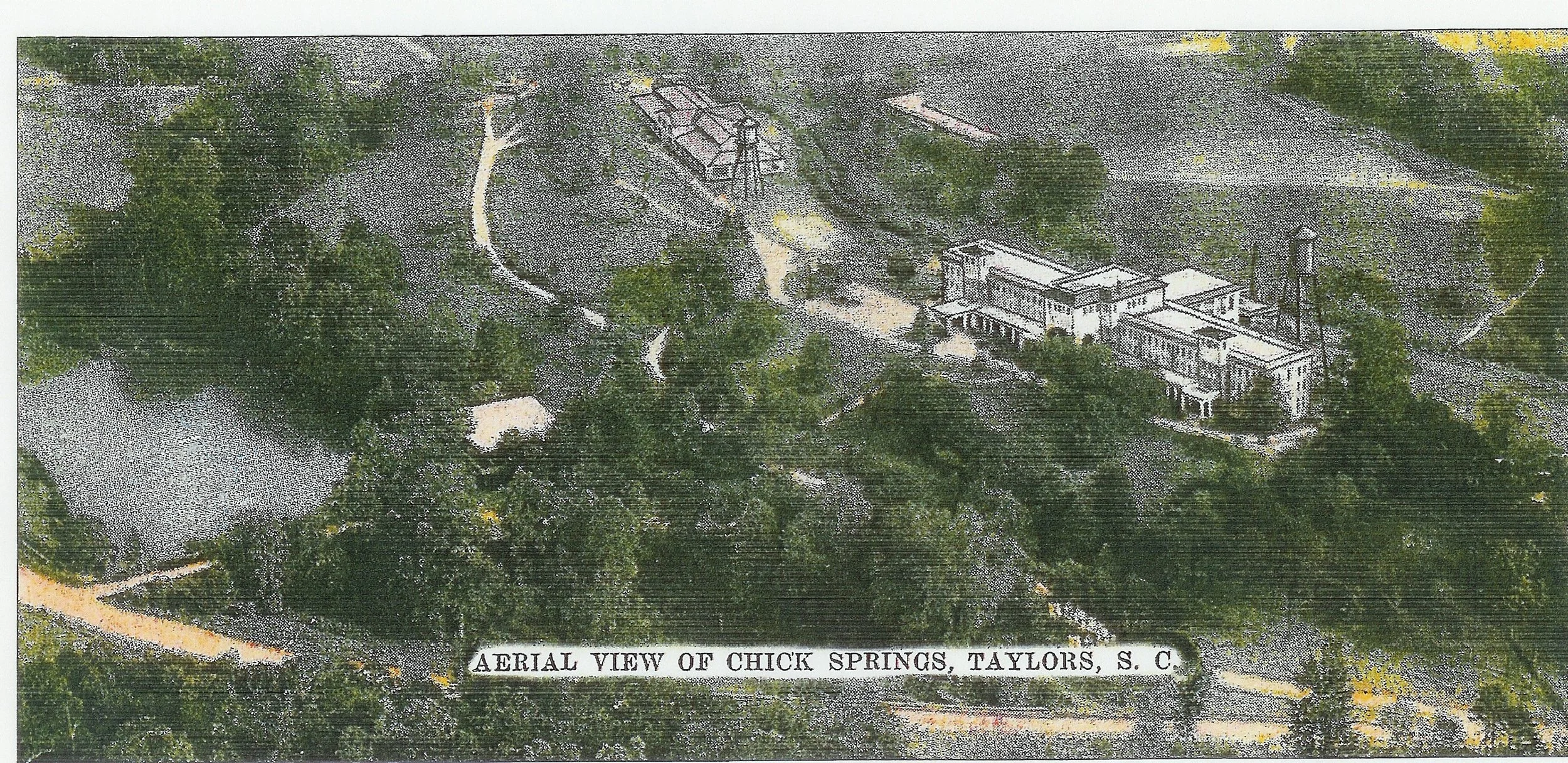
The Spring Came First
Here's the part that surprises people: Chick Springs is older than Taylors. Not just a little older. The mineral spring that gave the area its name was drawing people together decades before anyone called this place "Taylors" at all.
Governor John Drayton documented the sulphur spring in 1802. David Ramsay described it in his 1809 History of South Carolina. Robert Mills praised the water's healing properties in his 1826 Statistics of South Carolina. Three published authorities wrote about Chick Springs before Dr. Burwell Chick ever arrived.
The spring had been known even longer than that. According to an account passed down through Alfred Taylor's family, in 1838 Dr. Chick was deer hunting and stopped at Asa Crowder's nearby home. Crowder hired two or three Indians from a village on the Enoree to guide Chick to the spring. They told him the ground at the spring would heal a sore. The spring's reputation—as a place worth going to—predated every other institution in the area.
Nobody created the spring. People kept arriving at it.
What Grew Up Around It
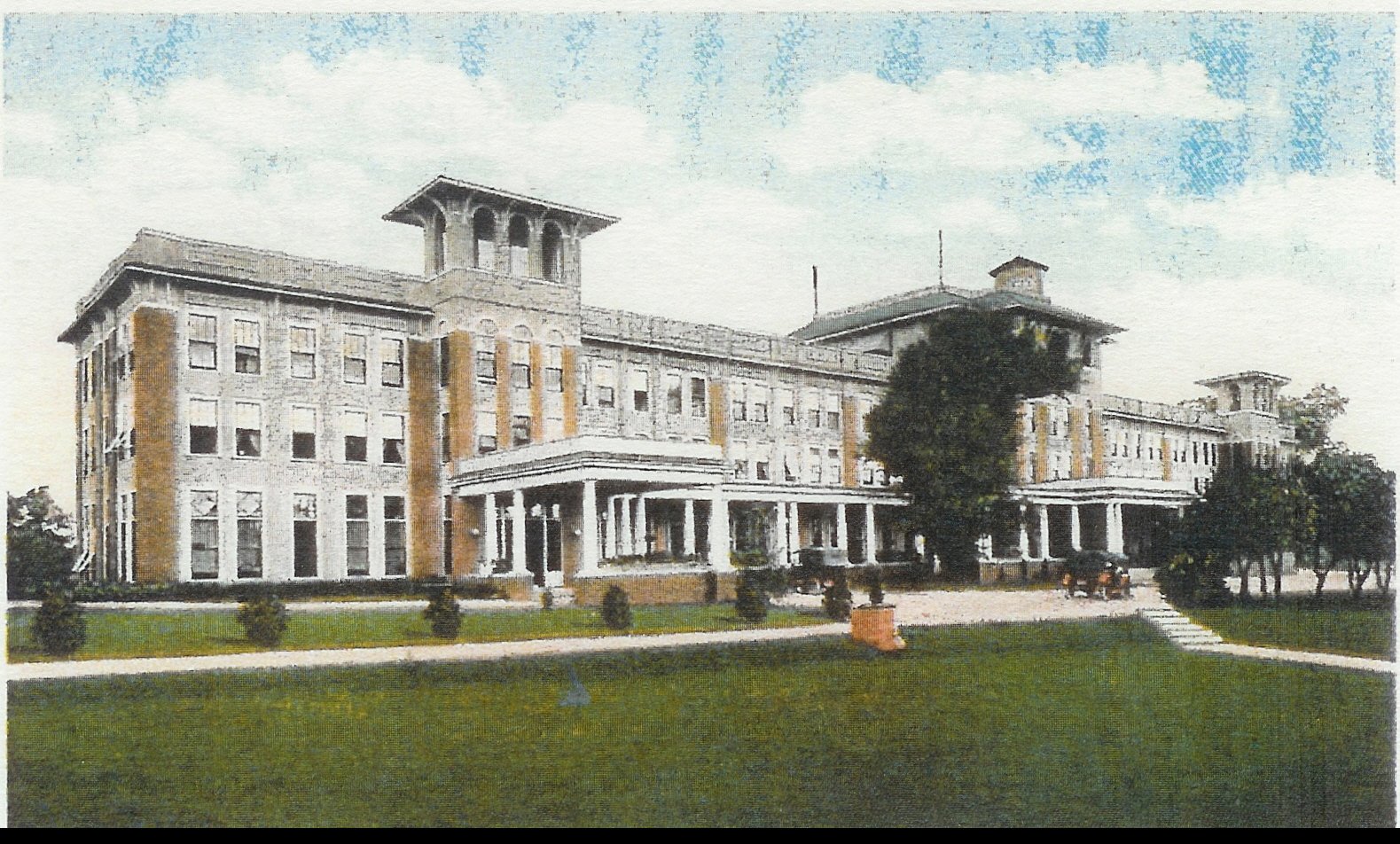
By 1842, Dr. Chick had built a sixty-room hotel. Board was a dollar a day. He sold twenty lots along Main Street for summer cottages. And what grew up around the spring wasn't just a resort, it was a community in miniature.
A newspaper reporter visiting in 1854 described "a very large concourse of persons from all parts of the State." The hotel held 150 guests, with hundreds more in surrounding cabins. Louisiana cotton planters mixed with Upcountry farmers. For ten and twenty miles around, locals sold their produce to feed the visitors, 75 chickens consumed daily for the hotel tables alone. Two stores operated side by side: one stocking bonnets and perfumery for summer visitors, the other selling shovels, coffee, and fiddle strings for the people who lived there year-round. Two entirely different economies sharing the same ground. In the evenings, the whole crowd assembled in the ballroom and danced till eleven or twelve o'clock.
A Catholic priest from Charleston held the first Roman Catholic services ever conducted in Greenville County at the hotel. Circuit preachers stopped at the spring on the second Sunday of each month. Democrat Clubs organized here. The Cotton Growers Association met here.
And critically, the Chick Springs Post Office was established in 1851 (fifty-three years before the Taylors Post Office). "Chick Springs Township No. 9" governed 49 square miles, with four school districts, elected officials, and a constable. The name didn't just label a resort. It organized governance, education, worship, and political life for thousands of people.
Alfred Taylor, the man who gave Taylors its name, was born near the spring in 1823. Over the course of his life, he became a sawmill operator, store manager, hotel manager, bridge builder, surveyor, brick maker, the first Postmaster of Chick Springs, a road and bridge commissioner, a sorghum syrup producer, a gristmill operator, and a Confederate veteran. One man, rooted in one place, touching every institution the community built. The spring made the community, which made the man, who made the town.
The Long Decline
I wish the story stayed in that key. It doesn't.
The first hotel burned on a November afternoon in 1862 and stood as a skeleton for over twenty years. In 1885, an Atlanta attorney named George Westmoreland bought the property and built a small replacement. Then J.A. Bull, a Greenville grocer, took over in 1903 and transformed Westmoreland's modest structure into a modern destination: 119 rooms, electric lights, New York and Washington newspapers arriving on the evening of publication. Four thousand guests registered in a single season. In December 1907, it all burned again. The damage was estimated at $40,000.
A fourth hotel went up in 1914, a hundred rooms built by a new investor named J. Thomas Arnold. It opened to a full house and emptied within weeks when World War I began. After that came a military academy (it lasted two years), a medical clinic (its founder died suddenly in 1932), and an amusement park with a dance pavilion where scores of local people came for Sunday afternoon concerts. "The Great Depression did what war and fire couldn't do," Judith Bainbridge wrote in her history of Greenville. Resorting to Chick Springs ended.
The state highway department had cut Highway 29 through the property in 1925, bisecting the gathering place. An inadequate culvert created a dam effect, and the devastating flood of September 1929 submerged the amusement park and surrounding properties in up to twenty feet of water.
In all, four hotels were built on the site over three-quarters of a century: two burned, one was absorbed into the next, and the last — Arnold's hundred-room building — was sold at federal foreclosure auction in February 1937 after the clinic's debts overwhelmed it. A Spartanburg car dealer named R.E. Foil acquired the property for $15,000 and briefly rented the hotel as apartments before subdividing. By early 1939, the hotel's boilers and water tank were being sold off at "give-away price." G. Furman Norris established a sportswear factory in ancillary buildings on the property that same year. In March 1940, Foil had the hotel itself torn down for a real estate subdivision — the Greenville News published a photograph of the demolition, the only known image of the building coming down. The most significant building in the area, and a single newspaper photo is all that marks its end.
What followed was a long narrowing. Each time the property changed hands, fewer people could access it. The big swimming pool, 350 feet by 150 feet, sand bottom, fifteen feet deep under the diving board, room for four or five hundred swimmers at a time, kept the place alive in community memory through the 1960s and early 70s. If you grew up around here in that era, you probably remember it. You might remember crossing the rustic bridges over Lick Creek, drinking the mineral water in the octagonal springhouse, sitting on benches under the trees, and waiting until the last possible minute before heading home.
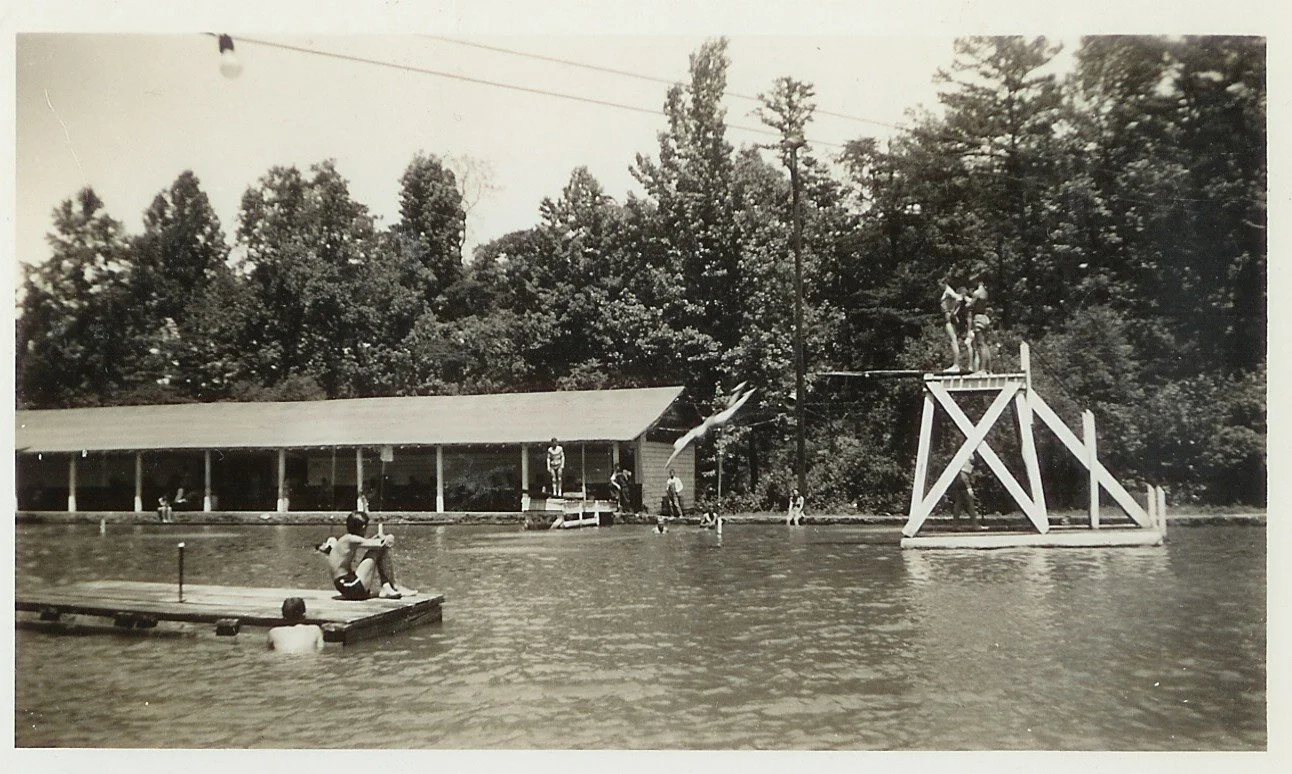
The pool was closed and drained in 1972. The hotels were long gone. The bottling plant was torn down. The arches and rides disappeared. The lake was drained. A gem mine operated for three years starting in 1989, the last time the general public accessed the space, before it, too, closed.
By 2006, historian Judith Bainbridge could write: "All traces of the once lively resort have vanished, swallowed up by overgrown trees and brambles near the original spring and by raw new housing that sits atop the 'eminence' where hotels stood for three-quarters of a century."
From a 692-acre tract that functioned as one of the Upstate's great gathering places to behind a fence. The commons became property.
A Name Without a Place
As I mentioned in last month's article on why Taylors never became a city the naming history of this area tells its own story. "Chick Springs" was the name first. When the Southern Railway established a station on Alfred Taylor's property around 1873, "Taylor's Station" emerged as a new center of gravity. Over time, the institutions that had organized around the spring packed up and moved to where the train stopped. The schoolhouse was cut into sections, balanced on wagons, and moved to the Station in February 1880. The church voted to relocate in December 1884. In March 1904, the post office officially changed from Chick Springs to Taylors.
Today, "Chick Springs" is everywhere as a label—on roads, on neighborhoods, on the general map of the area—but the actual spring has been inaccessible for decades. The name spread geographically even as the place it referred to contracted to nothing.
That gap between the name everyone knows and the place almost no one has seen is exactly what this project is about.
In 1994, local historian Jean Martin Flynn made an observation that reads like prophecy: "What is the future of Taylors? …there does not appear to be an equivalent of a Chick Springs or a Southern Railroad or a Southern Bleachery. It may well be the future lies in the continuous, steady influx of people."
Thirty years later, the influx happened. Taylors and the broader Greenville area are growing fast. New residents arrive every week. That growth brings real benefits: investment, energy, new neighbors. But it also raises the question that every growing community eventually faces: what gives the people who live here, whether they've been here for decades or months, a shared sense that this is somewhere, not just anywhere?
I've spent years digging into this history, and the thing that keeps striking me is how much was here, and how quietly it disappeared. I don't think it has to stay that way. I think the places where people gather carry something that can't be replicated or replaced, and that a community that lets its gathering places disappear eventually loses something it can't get back.
The spring still flows. It's been flowing since before anyone called this area Chick Springs or Taylors or anything else. In 2024, Taylors TownSquare completed the acquisition of the property with the goal of returning it to the community. Hurricane Helene damaged the historic springhouse last fall, but the restoration work is moving forward.
On March 26 at 6:00 PM at the Taylors First Baptist Church Ministry Center, we're hosting a free community event to share what we've found, the full history of this place, and to reveal the master plan for its future. If you've ever driven past the Chick Springs signs and wondered what the story was, if you grew up swimming in that pool and haven't thought about it in years, or if you just moved here and want to understand where you've landed, this evening is for you.
We'd love you to be part of what comes next.
Sources
The historical claims in this article are drawn primarily from a few published local histories and newspaper articles:
Jean Martin Flynn, An Account of Taylors, South Carolina 1817–1994 (self-published). Flynn's book is the most comprehensive account of the Taylors and Chick Springs area, drawn from court records, deeds, Alfred Taylor's diary, newspaper accounts, and extensive local research. The 1854 newspaper account of visitors, the civic infrastructure of Chick Springs Township, Alfred Taylor's biography, the swimming pool details, the schoolhouse relocation, the post office history, and the 1994 assessment of Taylors' future are all from Flynn.
Judith T. Bainbridge, Greenville's Heritage (J & B Publications, 2006), chapter "Dr. Chick's Spa," pp. 69–73. Bainbridge provides a compact narrative of the resort's arc and is the source for the early documentation chain (Drayton 1802, Ramsay 1809, Mills 1826), the Depression-era assessment, and the 2006 description of the vanished resort.
The account of Dr. Chick's encounter with Indian guides at the spring in 1838 comes from J.A. Bull, who was quoting Alfred Taylor. This oral account was recorded by Flynn (Ch. 15, pp. 159–160), who noted the guides may have been Catawba rather than Cherokee.
The resort fire dates (1862, 1907), hotel capacities, Highway 29 construction, the 1929 flood, and property ownership history are documented across both sources and corroborated by court records cited in Flynn's endnotes.
Newspaper articles from Newspapers.com also contributed to this narrative.
Explore the full timeline
We have told the story of Chick Springs era by era at chicksprings.org. Each chapter has its own page:
- Before the Doctor: a mineral spring known to the Cherokee and documented by three published authorities before Dr. Chick arrived.
- The Resort Era: Dr. Chick builds one of the Upstate's first destination resorts.
- War, Railroad, and a Name That Moved: the hotel burns, the railroad arrives, and every institution moves from the Springs to the Station.
- Bull's Grand Hotel: J.A. Bull turns a 16-room inn into a 119-room resort that drew four thousand guests in a single season.
- Three Hotels, a Military Academy, and a Hospital: after another fire, a run of reinventions, each one smaller than the last.
- Amusement Park and the Flood: a 350-foot swimming pool and a ballroom, until the state builds a highway through the property and floods it all.
- The Pool: for a generation, Chick Springs meant one thing, the spring-fed swimming pool. It was also segregated.
- Behind the Fence: the pool closes, the marker is stolen, and the property sits in private hands, overgrown and forgotten.
- The Fight to Come Back: nearly twenty years of historians, conservationists and civic leaders who refused to let the place disappear.
- The Spring Still Flows: eight and a half acres, a hurricane, and the restoration now underway.
Sources and credits for the timeline are on their own page.