
Why Taylors Never Became a City, Revisited
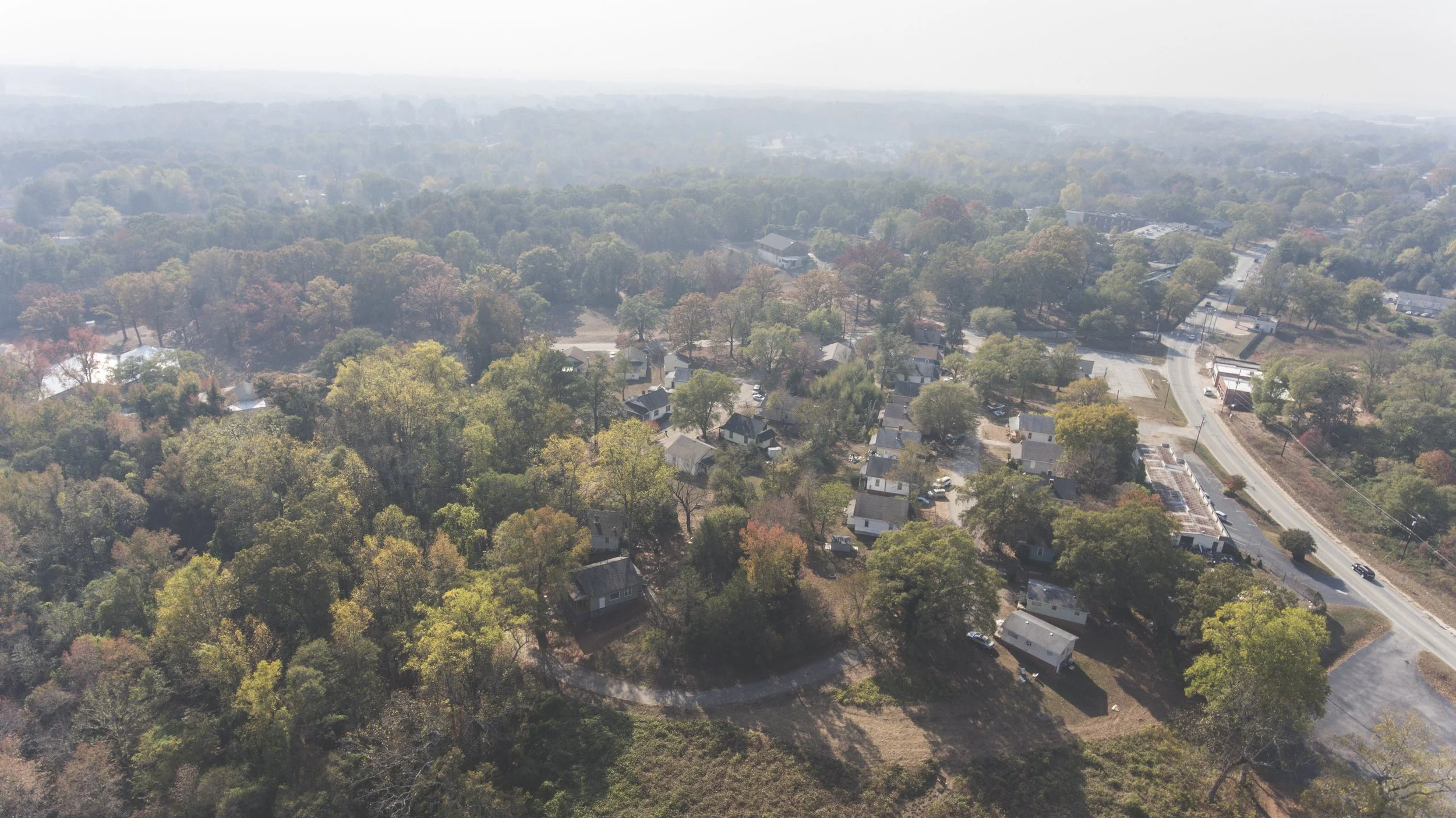
In February, we published an article about why Taylors never became a city. We told the story most people who know anything about this remember: the 2005 referendum, the Greer annexation fight, the 63-37% vote against incorporation.
But in telling that story so thoroughly, we skipped the earlier effort in any meaningful detail. And in skipping the 1963 referendum, we skipped the deeper reason Taylors never became a city. The 2005 vote was dramatic. The 1963 vote was decisive. And the decision that made both outcomes almost inevitable happened before either vote was held.
A Community Without Water
By the late 1950s, Taylors had no public water system, no sewer system, and no fire protection beyond what the neighboring Wade Hampton district could provide. Residents were on wells and septic. The community carried a Class 10 ISO fire rating, the worst possible, which meant homeowners' insurance was either prohibitively expensive or hard to get at all. Greenville County's population had grown from 168,000 to nearly 210,000 during the decade. Subdivisions were being platted along Wade Hampton Boulevard. But there were no pipes in the ground and no fire trucks within miles.
The county could not help. Under the 1895 South Carolina Constitution, counties had an extraordinarily narrow set of powers: roads, bridges, prisoners, and paupers. They were not authorized to provide water, fire protection, or sewer service. This was not an oversight. The 1895 Constitution was written to keep local government weak and the General Assembly strong. Each county's legislative delegation served as the de facto county council. There was no locally elected governing body to petition.
This left unincorporated communities with two options. They could incorporate as a full municipality (mayor, council, police, courts, taxation), which was expensive and politically heavy for a community of 1,200 people. Or they could ask their legislative delegation to pass a special act creating a limited-purpose district, such as water, fire, sewer, or some combination. The district could levy taxes and issue bonds, but it didn't require the creation of a city government.
The special-purpose district was not an obscure legal maneuver. It was the standard mechanism, a legislative workaround for a constitution that gave counties almost no power and communities no intermediate option between wells and septic and full municipal government. The neighboring Wade Hampton community had done exactly this four years earlier. By the late 1950s, districts were proliferating across Greenville County: Parker, Gantt, Marietta, all following the same playbook.
Three Men and a Water Problem
Three men set out to get Taylors on that path: M. Ansel Alewine, president of the Taylors Lumber Company; George D. Stewart, a musician and auction barn operator who had been "Baby Ray" of Baby Ray and the Country Cousins; and Mack A. Ashmore, a local businessman.
On December 17, 1957, more than 100 people attended a meeting at Taylors High School. Sixty-one signed petitions that night. S.P. Anderson of Piedmont Engineering laid out the plan, noting that a Wade Hampton fire station being planned nearby "might serve the Taylors District and lower fire insurance rates." The economics were tangible: a functioning fire department with hydrants could drop Taylors’ ISO rating from Class 10, cutting insurance costs for every property owner.
By April 1958, the General Assembly had passed Act No. 1099, creating the Taylors Water and Sewer District. Commissioners were elected in June: Alewine, Stewart, and Frank Collins. A bond referendum authorized $275,000 for construction in November. The three commissioners paid the cost of the referendum election out of their own pockets: Alewine, $80.74; Stewart and Collins, $80.73 each. They received no salary, no travel allowances, and no insurance.
By May 1960, the water system was operational. The district had also established its own fire department, with twenty-seven volunteers led by Chief Jack Watson working out of a rented building on West Main Street. Taylors' ISO rating jumped from Class 10 to Class 8 by October of that year. By 1965, it reached Class 7, cutting fire insurance costs roughly in half.
This was the fork in the road. The district provided water, then fire protection, and eventually sewer service, all funded by property tax millage rather than municipal taxation. By the time the question of incorporation arose, residents already had the services that would have been the most compelling argument for cityhood.
"Bad Incorporation Is Worse Than a Bad Marriage"
The incorporation movement of 1962-63 was driven by civic aspiration rather than existential threat. Rev. Jack Nanney, pastor of Taylors First Baptist Church, declared himself "wholly in favor of incorporation because of the benefits we would receive." A study committee was formed with representatives from the Taylors Garden Club, local businesses, the Lions Club, the American Legion, and the PTA.
On October 29, 1962, a community meeting at Taylors Elementary School laid out the case: street lights, sidewalks, police protection, free garbage collection, and an improved fire district. The committee circulated handbills "urging citizens to attend the meeting to ask questions and warning against 'irresponsibility and ignorance.'"
The opposition organized quickly. C. T. Charping, owner of Charping Hardware and Paint Store, declared that "nearly 100 per cent of the business people in Taylors are opposed." About 70 people formed the "Taylors Committee Opposing Incorporation." Their primary spokesman, Leland Lowery, laid out the math: first-year operations would cost $44,000 against only $20,000 in income. He noted that 514 street lights would be needed at $44-$90 each, that police vehicles cost four times more to operate than private cars, and that the 33 businesses in the proposed area would generate only $1,600-$1,800 in license fees. He quipped, "Bad incorporation is worse than a bad marriage. You can't get a divorce."
The most contentious moment came on January 3, 1963, when about 300 people packed the Taylors Elementary School auditorium. The meeting "got unruly at times and even verged on personality clashes." One of three mayoral candidates withdrew during the meeting.
Two exchanges are revealing. When asked whether annexation by Greenville was a concern, attorney Sidney Jay said explicitly that "annexation was not a possibility that brought on the incorporation movement." And when someone asked why the Southern Bleachery wasn't included in the proposed boundaries, Jay replied that he was "informed the mill did not want in the district and did not want to get in the town." The Bleachery had its own private water and sewer system. The exclusion of the community's largest employer considerably weakened the case.
The Vote
Two candidates remained for mayor. One was George D. Stewart, the same man who had co-founded the water district four years earlier. He estimated a first-year budget of $19,000-$20,000 and said the town could have "100 street lights, a police car and a night policeman for $12,000."
Voting took place on February 19, 1963, at a single location: Jim Crain's Rainbow Trailer Court on Wade Hampton Boulevard. The result: 426 against, 104 in favor. Eighty percent to twenty. Had it passed, Carl Bruce, the other mayoral candidate, would have been elected. Stewart received 83 votes. The man who built the district that gave Taylors its infrastructure was rejected as the leader of the city that would have governed it.
The Irony
George Stewart, Ansel Alewine, and the men who organized and governed the district solved Taylors' infrastructure problem without a city government. In doing so, they built the strongest possible argument against ever forming one. Every subsequent case for incorporation had to overcome a single rejoinder: "We already have what we need."
Stewart himself clearly didn't see it that way. He ran for mayor. He believed the community should take the next step. But the institution he helped create had already closed the door.
Jean Martin Flynn, writing three decades later, put it concisely: the incorporation effort arose because "city water and fire protection had led to the only effort in the history of Taylors to incorporate the town." The infrastructure made residents think about municipal services. But it also undercut the case for a municipal government, since the most critical services were already being delivered without one.
After the vote, the political energy didn't dissipate. Anti-incorporation leaders ran as write-in candidates for the Water and Sewer District Commission and nearly won. The district evolved: in 1965-66, commissioners sold the water system to the Greenville Water Works, freeing tax revenue for sewer construction. The district was renamed the Taylors Fire and Sewer District. The institution deepened. The question of cityhood receded.
Carl Bruce, who would have been Taylors' first mayor, captured the paradox years later: "We're perhaps better off unincorporated. We haven't been annexed. Our fire department is super, and the sheriff does a real good job for us."
The Pattern
When the incorporation question returned in 2005, the dynamics had changed. Greer was annexing commercial properties along Wade Hampton Boulevard. The “threat” was real, and the stakes were higher. But the underlying structural problem was the same: residents already had fire and sewer service throughout the district, law enforcement through the county, and water service through Greenville Water. Incorporation meant adding a municipal tax layer on top of what they were already paying for services they were already receiving.
The 2005 vote was closer (63% to 37%), but the outcome was the same. And the argument that carried the day was the same argument that carried it in 1963: we already have what we need.
The Greenville News editorial board, writing after the 2005 defeat, observed that this has only become more pointed with time: "Part of Taylors' identity is that it is not a city."
Whether that identity is a choice or a consequence is an open question. The special-purpose district was a tool designed to solve a narrow problem, and it solved it so well that it foreclosed the broader solution. It could deliver water and fire, but it could not zone, plan, or compete with neighboring cities for economic development. When Greer offered developers incentive packages in the 2000s, the Taylors Fire and Sewer District had no legal authority to respond. The tool that solved the 1957 problem had become the constraint that defined the 2005 one, and continues to define Taylors to this day.
This is a follow-up to our February 2026 article, "Why Taylors Never Became a City." Primary sources include archived reporting from The Greenville News (1957-1963, 2003-2005), Jean Martin Flynn's An Account of Taylors, South Carolina 1817-1994 (1995), and the South Carolina Constitution, Article VIII.